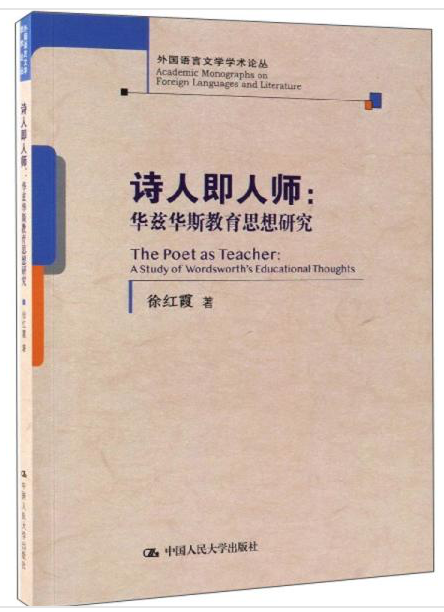
List of Abbreviations Epigraphs Introduction Chapter 1 Wordsworth as a Critic of Practical Education Chapter 2 Wordsworth’s Alternative of Poetic Education Chapter 3 The Poet as Teacher of the Reader Chapter 4 Wordsworth Edited for Educational Purposes Conclusion Why Wordsworth Still Matters Bibliography
精彩片段:
The Poetic Education of Wordsworth’s Speakers
The poetic speakers whose education will be examined include the “I” in Wordsworth’s autobiographical verse The Prelude, the Female Vagrant in the Salisbury Plain poems, and the Pedlar in The Ruined Cottage who later becomes the Wanderer in The Excursion. All of their educational backgrounds were under constant revision over a period of around forty years, which offers an opportunity to study the changes and development of Wordsworth’s views on poetic education. Each version and revision bears the mark of Wordsworth’s concerns of poetic education at the time of composition, which has a certain correspondence with his general views on practical education as laid out in the previous chapter. Through a comparative reading of the revision history of the poetic speakers’ education, this section will reveal a general pattern that nature, books, and religion constitute the most important factors in a poetic education, but their relative importance changes as nature’s role declines and religion’s role ascends with each revision.
To treat the narrative “I” of The Prelude as one of the speakers instead of the poet himself requires some clarification. Stephen Gill reminds readers that as a poem, The Prelude is “a wonderful achievement,” but as an autobiography, “it is open to question” (Life 2). Gill calls readers to “resist the proffered key” of the author, in light of the discrepancies between the facts and Wordsworth’s “interpretative glosses” on them, especially when “the gloss itself . . . is subject to revision.” If The Prelude is “an imaginative treatment of” the growth of a poet’s imagination, then who is the “I” of the narrative? For Michael Benton, The Prelude’s narrator is “not the well-documented figure from literary history,” nor “the implied author,” but rather somewhere between the two, a “persona,” or “a projection of the Poet-self which Wordsworth self-consciously creates as he explores his own life narrative.”

 中国大学出版社协会 |
首页 |
宏观指导 |
出版社天地 |
图书代办站 |
教材图书信息 |
教材图书评论 |
在线订购 |
教材征订
中国大学出版社协会 |
首页 |
宏观指导 |
出版社天地 |
图书代办站 |
教材图书信息 |
教材图书评论 |
在线订购 |
教材征订