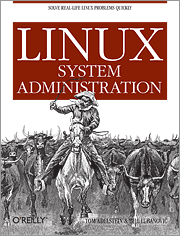
Preface 1.Requirements for a Linux System Administrator 2. Setting Up a Linux Multifunction Server 3. The Domain Name System 4. An Initial Internet-Ready Environment 5. Mail 6. Administering Apache 7. Load-Balanced Clusters 8. Local Network Services 9. Virtualization in the Modern Enterprise 10. Scripting 11. Backing Up Data Appendix. bash Script Samples Index
精彩片段:
As Bill Lubanovic and I were putting the final touches on this book, I overheard a conversation between two coworkers in our Cisco lab discussing Linux. The senior networking guru of the two made an interesting remark. He said that despite all his knowledge, he felt incomplete as a professional because he had never learned Linux. A moment later he and the other gentleman turned to me and looked me square in the eyes. I smiled and went on working. That evening, our director of Information Technology made an offhand remark to me during a conference that struck me as unusual. He said that he wanted to learn Apache, and when I asked him why he replied, “I just want to learn it,” and left it at that. Later in the conference, our director requested feedback from the group on a solution for patch management, explaining and using the example of rsync. He said he wanted something similar, while launching into a detailed technical discussion of incremental and cumulative patch management. I have a good working knowledge of rsync, but hadn’t heard such a detailed academic explanation of any open source tool in any forum. In both of those cases and many others, I wished I had this book ready to hand over to highly trained and skilled people who wanted to learn Linux administration. Perhaps you have had similar experiences and wished you had a book like this one at hand. I venture to guess that conversations like the ones I’ve just described occur many times in many places daily.

 中国大学出版社协会 |
首页 |
宏观指导 |
出版社天地 |
图书代办站 |
教材图书信息 |
教材图书评论 |
在线订购 |
教材征订
中国大学出版社协会 |
首页 |
宏观指导 |
出版社天地 |
图书代办站 |
教材图书信息 |
教材图书评论 |
在线订购 |
教材征订