中国概况China, whose full name is the Peoples Republic of China, has a vast land with boundless natural resources, a long history, spectacular landscapes, colorful cultural heritage and varied national customs. The Chinese nation created a glorious civilization in the early stage of mankinds history. The compass, gunpowder, the art of papermaking and movable type printing invented by the ancient Chinese have contributed tremendously to the progress of mankind in the world. The Great Wall, the Grand Canal and other projects built by the Chinese people are regarded as engineering feats on the globe.1. Location and Territory1) LocationChina is located in eastern Asia, on the west coast of the Pacific Ocean, surrounded by the East China Sea, Korea Bay, Yellow Sea, and South China Sea. The total land area of China is 9,600,000 square kilometers, slightly smaller than that of Europe, and it is the largest country in Asia and the third largest country in the world next only to Russia and Canada. (see picture 11)2) TerritoryFrom east to west, the territory of China extends from the confluence of the Heilong River and Wusuli River to the Pamirs, which covers a distance of about 5,200 kilometers; from north to south, China stretches from the center of the Heilong River north of the town of Mohe to the Zengmu Reef at the southernmost tip of the Nansha Islands, covering a distance of about 5,500 kilometers.China shares a boundary of some 22,800 kilometers, bordered by North Korea to the east; Mongolia to the north; Russia to the northeast; Kazakhstan, Kyrgyzstan and Tajikistan to the northwest; Afghanistan, Pakistan, India, Nepal and Bhutan to the west and southwest; and Myanmar, Laos and Vietnam to the south. Across the seas to the east and southeast are the South Korea, Japan, the Philippines, Brunei, Malaysia and Indonesia.3) Territorial Waters and IslandThe Chinese mainland is flanked to the east and south by the Bohai Sea as Chinas continental sea,Yellow Sea, East China Sea and South China Sea as marginal seas of the Pacific Ocean. The coastline of Chinas mainland is about 18,000 kilometers, with a flat topography and many excellent icefree docks and harbors.Chinas territorial waters are 4.73 million square kilometers. There are about 5,400 islands lying offshore of China, the largest of which are Taiwan Island with an area of about 36,000 square kilometers, and Hainan Island with an area of 34,000 square kilometers. There are a lot of archipelagoes such as the Zhoushan Islands and the islands in the East and South China Seas. There are a number of peninsulas along the coast; the largest ones are the Shandong Peninsula, Liaodong Peninsula and Leizhou Peninsula.2. TopographyThe topography of China is characterized by high west part and low east part, gradually descending in elevation from the west towards the east to form three steps. The highest step is the QinghaiTibet Plateau with the elevation being generally more than 4,500 meters above sea level, hence known as “the roof of the world”. To the east of the QinghaiTibetan Plateau is the second step with much lower elevations, ranging between 1,000 meters and 2,000 meters and alternating with huge basins. The third step stretches from the line in the west composed of the Greater Hinggan Mountains, Taihang Mountain, Wu Mountain and the eastern rim of the YunnanGuizhou Plateau to the coast in the east, and embraces alternating hills and plains, and there are large areas of low mountains and hills at elevations of less than 500 meters above sea level with only a few peaks being at 2,000 meters, and the elevation of plains is all less than 200 meters.The plains are the important industrial and agricultural bases and economic centers of China. They are distributed in the north to south direction, including Northeast Plain, North China Plain, Middle to Lower Yangtze Plain and Pearl River Delta Plain. According to the types of topography, mountains in China account for 33.3% of the national land area, plateaus 26.0%, basins 18.8%, hills 9.9% and plains 12.0%.Most rivers in China flow west to east into the Pacific Ocean except a few in the Southwest that flow to the South. The Yangtze River, 6,300 kilometers long, is the largest river in China, which originates from the Tanggula Mountain on the QinghaiTibet Plateau and flows to the East China Sea. It is the third longest river after the Nile and the Amazon. The Yellow River is 5,500 kilometers long, the second longest river in China, flowing to the Bohai Sea. Both rivers are the birthplaces of ancient Chinese civilization with a wealth of historical sites and relics.3. ClimateChina is a country with diverse climates. From the south to the north, the country is divided into tropical, subtropical, temperate and frigid climate zones. The climate in China varies greatly. For instance, Hainan Island in the south has long, hot summers and no winters, while the winter temperature drops to below 30℃ in Heilongjiang, Jilin and Liaoning provinces in the northeastern part of China.Most of China lies in the North Temperate Zone, characterized by a warm climate and distinctive seasons, a climate well suited for habitation. Most parts of China are subject to strong monsoon climate. From September to April the following year, the dry and cold winter monsoons blow from Siberia and the Mongolian Plateau, resulting in cold and dry winters and great differences between the temperatures of north and south China. From April to September, warm and humid summer monsoons blow from the seas in the east and south, resulting in overall high temperatures and plentiful rainfall, and little temperature difference between north and south China.Precipitation gradually declines from the southeastern to the northwestern inland area, and the average annual precipitation varies greatly from place to place and from season to season. The average annual precipitation in China is 648 mm, or 19% less than the world average 800 mm on land. The annual precipitation in the southeastern coastal areas and parts of the southwestern areas is more than 2,000 mm, but that in the northwestern China is usually less than 200 mm, and 50 mm in the Tarim and Turpan basins in Xinjiang and Chaidamu Basin in Qinghai, etc., even less than 25 mm at centers of those basins.4. Natural Resources1) Cultivated Land, Forest and GrasslandChinas cultivated lands, forests and grasslands are among the worlds largest in terms of sheer area. However, due to Chinas large population, the percapita areas of cultivated land, forest and grassland are small, especially in the case of cultivated land — only one third of the worlds average.In China, 130.04 million hectares of land are cultivated, mainly on the Northeast Plain, the North China Plain, the MiddleLower Yangtze Plain, the Pearl River Delta and the Sichuan Basin. The fertile black soil of the Northeast Plain, the largest plain in China with an area of more than 350,000 square kilometers, abounds in wheat, corn, sorghum, soybeans, flax and sugar beet. The deep brown topsoil of the North China Plain is planted with wheat, corn, millet and cotton. The MiddleLower Yangtze Plains flat terrain and many lakes and rivers make it particularly suitable for paddy rice and freshwater fish; therefore, it is called “a land of fish and rice.” This area also produces large quantities of tea and silkworms. The purplish soil of the warm and humid Sichuan Basin is green with crops in all four seasons, including paddy rice, rapeseed and sugarcane. The Pearl River Delta abounds with paddy rice, harvested 23 times every year.Forests cover about 175 million hectares of China. The Greater Hinggan Mountains, the Lesser Hinggan Mountains and Changbai Mountain Ranges in the northeast are Chinas largest natural forest areas. Major tree species found here include conifers, such as Korean pine, larch and Korean larch, and coniferousbroadleaf trees such as white birch, oak, willow, elm and Northeast China ash. Major tree species in the southwest include the dragon spruce, fir and Yunnan pine, as well as teak, red sandalwood, camphor, nanmu and so on. Xishuangbanna, often called a kingdom of plants, in the south of Yunnan Province, is a rare tropical broadleaf forest area in China, playing host to more than 5,000 plant species.Grasslands in China cover an area of 400 million hectares, stretching more than 3,000 kilometers from the northeast to the southwest. They are the centers of animal husbandry. The Inner Mongolian Prairie is Chinas largest natural pastureland, and home to the famous Sanhe horses, Sanhe cattle and Mongolian sheep. The important natural pasturelands in north and south of the Tianshan Mountains in Xinjiang are ideal for stockbreeding, where the famous Ili horses and Xinjiang finewool sheep are raised.2) Mineral ResourcesChina has deposits of almost all the minerals known in the world. Minerals of 151 different kinds have been verified,which lead the world in the reserves of tungsten, antimony, rare earth, molybdenum, vanadium and titanium. Other deposits which are among the largest in the world are coal, iron, leadzinc, copper, silver, mercury, tin, nickel, phosphorus and asbestos.Chinas basic coal reserves total 334.2 billion tons, mainly distributed in north, northwest, northeast and southwest China with Xinjiang Uygur Autonomous Region, Shanxi Province and the Inner Mongolia Autonomous Region heading the field. Chinas 21.24 billion tons of the basic iron ore reserves are distributed mainly in northeast, north and southwest China such as Liaoning Province, eastern Hebei and western Sichuan provinces. Tungsten reserves are concentrated in southeastern Hunan, southern Jiangxi, and northern Guangdong, western Fujian and eastern Guangxi, though they are found in 19 provinces and autonomous regions across China.China also abounds in petroleum, natural gas, oil shale, phosphorus and sulfur. Petroleum reserves are mainly found in northwest, northeast and north China, as well as in the continental shelves of east China.3) Water ResourcesFreshwater in China mainly comes from rivers and lakes. Chinas territory includes numerous lakes, most of which are found on the MiddleLower Yangtze Plain and the QinghaiTibet Plateau. Freshwater lakes such as Poyang Lake, Dongting Lake, Taihu Lake, and Hongze Lake mostly lie in the former area, while in the latter are saltwater lakes, such as Qinghai Lake, Nam Co Lake and Siling Co Lake. Poyang Lake in the north of Jiangxi Province, with an area of 3,583 square kilometers, is the largest of its kind. Qinghai Lake, in northeast Qinghai Province and with an area of 4,583 square kilometers, is the largest one of its kind.Chinas rivers can be categorized as exterior and interior systems. The catchment area of the exterior rivers that empty into the oceans accounts for 64% of the countrys total land area. The Yangtze, Yellow, Heilong, Pearl, Liaohe, Haihe and Huaihe rivers flow east, and empty into the Pacific Ocean. The Yarlung Zangbo River in Tibet, which flows first east and then south into the Indian Ocean, boasts the Yarlung Zangbo Grand Canyon, the largest canyon in the world, 504.6 kilometers long and 6,009 meters deep. The Ertix River flows north from the Xinjiang Uygur Autonomous Region to the Arctic Ocean. The catchment area of the interior rivers that flow into inland lakes or disappear into deserts or salt marshes makes up about 36% of Chinas total land area. Its length of 2,179 kilometers makes the Tarim River in southern Xinjiang Chinas longest interior river.The Yangtze River, 6,300 kilometers long, is the largest river in China, and the third largest in the world, next only to the Nile in Africa and the Amazon in South America. Passing through high mountains and deep valleys, the upper section of the Yangtze River is abundant in water resources. Known as the “golden waterway,” the Yangtze is a transportation artery linking west and east, its navigation benefiting from excellent natural channels. The middle and lower Yangtze River areas have a warm and humid climate, plentiful rainfall and fertile soil, making them important agricultural regions. The Yellow River is the second largest river in China with a length of 5,500 kilometers. The Yellow River valley was one of the birthplaces of ancient Chinese civilization. It has lush pasturelands along its banks, flourishing agriculture and abundant mineral deposits.The Heilong River is a large river in north China with a total length of 4,350 kilometers, of which 3,420 kilometers are in China. The Pearl River, 2,210 kilometers long, is a large river in south China. In addition to those bestowed by nature, China has a famous manmade river — the Grand Canal, running from Beijing in the north to Hangzhou in Zhejiang Province in the south. Work first began on the Grand Canal as early as in the 5th century B.C. It links five major rivers: the Haihe River, Yellow River, Huaihe River, Yangtze River and Qiantang River. With a total length of 1,801 kilometers, the Grand Canal is the longest as well as the oldest manmade waterway in the world.5. WildlifeChina is one of the countries with the greatest diversity of wildlife in the world. There are more than 6,266 species of vertebrates, 10% of the worlds total. Among them, 2,404 are terrestrial and 3,862 fishes. There are more than 100 wild animal species unique to China including such wellknown rare animals as the giant panda, goldenhaired monkey, South China tiger, browneared pheasant, redcrowned crane, crested ibis, Yangtze River dolphin, takin, Chinese Alligator and so on.China lies in two of the worlds major zoogeographic regions, the Palaearctic and the Oriental. The QinghaiTibet Plateau, Xinjiang and Inner Mongolia autonomous regions, northeastern China, and all areas north of the Yellow River are in the Palaearctic region. Central, southern, and southwest China lie in the Oriental region. In the Palaearctic zone, many important mammals are found such as the river fox, horse, camel, tapir, mouse hare, hamster, and jerboa. Among the species found in the Oriental region are the civet cat, Chinese pangolin, bamboo rat, tree shrew, gibbon and various other species of monkeys and apes. Some overlap exists between the two regions because of natural dispersal and migration, and deer or antelope, bears, wolves, pigs, and rodents are found in all of the diverse climatic and geological environments. The famous giant panda is found only in a few mountain ranges in Sichuan, Shaanxi, and Gansu provinces.A giant panda (see picture 12) weighs on average 135 kg and lives on tender bamboo leaves and bamboo shoots. Because it is extremely rare — just over 1,500 are left at present — it has become the symbol of the worlds protected wild animals. The redcrowned crane (see picture 13), which could be as tall as 1.2 m, is covered with white feathers, with a distinctive patch of exposed red skin crowning its head and is regarded as a symbol of longevity in East Asia. The Yangtze River dolphin (see picture 14) is one of only two species of freshwater whales in the world. In 1980, a male Yangtze River dolphin was caught for the first time in the Yangtze River, which aroused great interest among dolphin researchers worldwide.6. PopulationThe population of China, which is the largest in the world, is over 1.3 billion with 56 ethnic groups.The Chinese population is unevenly distributed and the population density exceeds 100 persons per square kilometers in most parts of the country east of the line drawn between Harbin and Kunming, and it is more than 400 persons per square kilometers in some areas. Population density is below 50 persons per square kilometers in the vast region west of the line, and in many areas it is less than one person per square kilometers. The eastern part of China is densely populated, while the western part is sparsely populated.The population of the Han nationality is the largest, accounting for over 91% of the national total. The Zhuang nationality (see picture 15) population is over 16 million, and coming next are the populations of the Manchu, Hui, Uygur (see picture 16), Miao (see picture 17), Yi, Tujia, Mongol, Tibetan, Buyi, Dong, Yao, Korean, Bai, Hani, Kazak, Li and Dai nationalities. The population of each of these ethnic groups exceeds one million. That of the smallest ethnic minorities comes to only a few thousands.The Han population is distributed over vast regions, but most of it is concentrated in eastern China. The areas in which ethnic minority peoples dwell in compact communities are, for the most part, located in Southwest, Northwest and Northeast China that make up more than half of Chinese territory. The populations of many ethnic groups are relatively concentrated in some areas, though many of their members are scattered all over the country. Such a distribution pattern is conducive to economic and cultural exchanges among the nationalities. This has given rise to a relationship of mutual interdependence and an unbreakable link of friendship among the nationalities in China.The Han people have their own spoken and written language, known as the Chinese language, which is commonly used throughout China. The Hui and Manchu ethnic groups also use the Han (Chinese) language. The other 53 ethnic groups use their own spoken languages and 23 ethnic groups have their own written languages.
作者简介:
章节目录:
目录 Chapter 1 A General Outline of China 中国概况Chapter 2 A Brief History of China 中国历史简介Chapter 3 Chinese Politics and Institutions 中国政体Chapter 4 National Minorities Policy and Its Practice 中国少数民族政策及实施Chapter 5 Ancient Chinese Philosophy and Religion 中国古代哲学和宗教Chapter 6 Ancient Chinese Education 中国古代教育Chapter 7 Chinese Names 中国姓名Chapter 8 Chinese Language and Characters 中国语言文字Chapter 9 Chinese Idioms and Fables 中国成语和寓言故事Chapter 10Chinese Food Culture 中国饮食文化Chapter 11Chinas Tea Culture 中国茶文化Chapter 12Chinese Traditional Ethnic Clothing 中国少数民族服饰
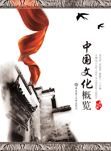
Chapter 13Chinese Plants and Their Cultural Connotations 中国植物文化意象Chapter 14Wedding Traditions in China 中国传统婚俗Chapter 15Chinese Traditional Folk Entertainments 中国传统民间游艺Chapter 16Ancient Chinese Martial Arts 中国古代武术Chapter 17Chinese Calligraphy and Painting 中国书画艺术Chapter 18Chinese Carving 中国雕刻Chapter 19Chinese Farmers Painting 中国农民画Chapter 20Chinese Folk Musical Instruments 中国民族乐器Chapter 21Appreciation of Chinese Folk Music 中国民族音乐Chapter 22Chinese Folk Art and Handicraft 中国传统民间工艺Chapter 23China Wisdom 中国智慧Chapter 24Famous Ancient Towers in China 中国古代名楼Chapter 25Chinese Ancient Gardens 中国古代园林Chapter 26The Silk Road 丝绸之路Appendix ⅠChinese Culture Words 中国文化词汇Appendix ⅡFamous People in Chinese History 中国历史名人Appendix ⅢA Brief Chinese Chronology 中国大事年简表Appendix ⅣChinas Top Ten 中国之最Appendix ⅤDirectory of World Cultural and Natural Heritage in China 中国世界自然文化遗产名录Bibliography参考文献中国文化概览 A BirdsEye View of Chinese Culture
精彩片段:
中国概况China, whose full name is the Peoples Republic of China, has a vast land with boundless natural resources, a long history, spectacular landscapes, colorful cultural heritage and varied national customs. The Chinese nation created a glorious civilization in the early stage of mankinds history. The compass, gunpowder, the art of papermaking and movable type printing invented by the ancient Chinese have contributed tremendously to the progress of mankind in the world. The Great Wall, the Grand Canal and other projects built by the Chinese people are regarded as engineering feats on the globe.1. Location and Territory1) LocationChina is located in eastern Asia, on the west coast of the Pacific Ocean, surrounded by the East China Sea, Korea Bay, Yellow Sea, and South China Sea. The total land area of China is 9,600,000 square kilometers, slightly smaller than that of Europe, and it is the largest country in Asia and the third largest country in the world next only to Russia and Canada. (see picture 11)2) TerritoryFrom east to west, the territory of China extends from the confluence of the Heilong River and Wusuli River to the Pamirs, which covers a distance of about 5,200 kilometers; from north to south, China stretches from the center of the Heilong River north of the town of Mohe to the Zengmu Reef at the southernmost tip of the Nansha Islands, covering a distance of about 5,500 kilometers.China shares a boundary of some 22,800 kilometers, bordered by North Korea to the east; Mongolia to the north; Russia to the northeast; Kazakhstan, Kyrgyzstan and Tajikistan to the northwest; Afghanistan, Pakistan, India, Nepal and Bhutan to the west and southwest; and Myanmar, Laos and Vietnam to the south. Across the seas to the east and southeast are the South Korea, Japan, the Philippines, Brunei, Malaysia and Indonesia.3) Territorial Waters and IslandThe Chinese mainland is flanked to the east and south by the Bohai Sea as Chinas continental sea,Yellow Sea, East China Sea and South China Sea as marginal seas of the Pacific Ocean. The coastline of Chinas mainland is about 18,000 kilometers, with a flat topography and many excellent icefree docks and harbors.Chinas territorial waters are 4.73 million square kilometers. There are about 5,400 islands lying offshore of China, the largest of which are Taiwan Island with an area of about 36,000 square kilometers, and Hainan Island with an area of 34,000 square kilometers. There are a lot of archipelagoes such as the Zhoushan Islands and the islands in the East and South China Seas. There are a number of peninsulas along the coast; the largest ones are the Shandong Peninsula, Liaodong Peninsula and Leizhou Peninsula.2. TopographyThe topography of China is characterized by high west part and low east part, gradually descending in elevation from the west towards the east to form three steps. The highest step is the QinghaiTibet Plateau with the elevation being generally more than 4,500 meters above sea level, hence known as “the roof of the world”. To the east of the QinghaiTibetan Plateau is the second step with much lower elevations, ranging between 1,000 meters and 2,000 meters and alternating with huge basins. The third step stretches from the line in the west composed of the Greater Hinggan Mountains, Taihang Mountain, Wu Mountain and the eastern rim of the YunnanGuizhou Plateau to the coast in the east, and embraces alternating hills and plains, and there are large areas of low mountains and hills at elevations of less than 500 meters above sea level with only a few peaks being at 2,000 meters, and the elevation of plains is all less than 200 meters.The plains are the important industrial and agricultural bases and economic centers of China. They are distributed in the north to south direction, including Northeast Plain, North China Plain, Middle to Lower Yangtze Plain and Pearl River Delta Plain. According to the types of topography, mountains in China account for 33.3% of the national land area, plateaus 26.0%, basins 18.8%, hills 9.9% and plains 12.0%.Most rivers in China flow west to east into the Pacific Ocean except a few in the Southwest that flow to the South. The Yangtze River, 6,300 kilometers long, is the largest river in China, which originates from the Tanggula Mountain on the QinghaiTibet Plateau and flows to the East China Sea. It is the third longest river after the Nile and the Amazon. The Yellow River is 5,500 kilometers long, the second longest river in China, flowing to the Bohai Sea. Both rivers are the birthplaces of ancient Chinese civilization with a wealth of historical sites and relics.3. ClimateChina is a country with diverse climates. From the south to the north, the country is divided into tropical, subtropical, temperate and frigid climate zones. The climate in China varies greatly. For instance, Hainan Island in the south has long, hot summers and no winters, while the winter temperature drops to below 30℃ in Heilongjiang, Jilin and Liaoning provinces in the northeastern part of China.Most of China lies in the North Temperate Zone, characterized by a warm climate and distinctive seasons, a climate well suited for habitation. Most parts of China are subject to strong monsoon climate. From September to April the following year, the dry and cold winter monsoons blow from Siberia and the Mongolian Plateau, resulting in cold and dry winters and great differences between the temperatures of north and south China. From April to September, warm and humid summer monsoons blow from the seas in the east and south, resulting in overall high temperatures and plentiful rainfall, and little temperature difference between north and south China.Precipitation gradually declines from the southeastern to the northwestern inland area, and the average annual precipitation varies greatly from place to place and from season to season. The average annual precipitation in China is 648 mm, or 19% less than the world average 800 mm on land. The annual precipitation in the southeastern coastal areas and parts of the southwestern areas is more than 2,000 mm, but that in the northwestern China is usually less than 200 mm, and 50 mm in the Tarim and Turpan basins in Xinjiang and Chaidamu Basin in Qinghai, etc., even less than 25 mm at centers of those basins.4. Natural Resources1) Cultivated Land, Forest and GrasslandChinas cultivated lands, forests and grasslands are among the worlds largest in terms of sheer area. However, due to Chinas large population, the percapita areas of cultivated land, forest and grassland are small, especially in the case of cultivated land — only one third of the worlds average.In China, 130.04 million hectares of land are cultivated, mainly on the Northeast Plain, the North China Plain, the MiddleLower Yangtze Plain, the Pearl River Delta and the Sichuan Basin. The fertile black soil of the Northeast Plain, the largest plain in China with an area of more than 350,000 square kilometers, abounds in wheat, corn, sorghum, soybeans, flax and sugar beet. The deep brown topsoil of the North China Plain is planted with wheat, corn, millet and cotton. The MiddleLower Yangtze Plains flat terrain and many lakes and rivers make it particularly suitable for paddy rice and freshwater fish; therefore, it is called “a land of fish and rice.” This area also produces large quantities of tea and silkworms. The purplish soil of the warm and humid Sichuan Basin is green with crops in all four seasons, including paddy rice, rapeseed and sugarcane. The Pearl River Delta abounds with paddy rice, harvested 23 times every year.Forests cover about 175 million hectares of China. The Greater Hinggan Mountains, the Lesser Hinggan Mountains and Changbai Mountain Ranges in the northeast are Chinas largest natural forest areas. Major tree species found here include conifers, such as Korean pine, larch and Korean larch, and coniferousbroadleaf trees such as white birch, oak, willow, elm and Northeast China ash. Major tree species in the southwest include the dragon spruce, fir and Yunnan pine, as well as teak, red sandalwood, camphor, nanmu and so on. Xishuangbanna, often called a kingdom of plants, in the south of Yunnan Province, is a rare tropical broadleaf forest area in China, playing host to more than 5,000 plant species.Grasslands in China cover an area of 400 million hectares, stretching more than 3,000 kilometers from the northeast to the southwest. They are the centers of animal husbandry. The Inner Mongolian Prairie is Chinas largest natural pastureland, and home to the famous Sanhe horses, Sanhe cattle and Mongolian sheep. The important natural pasturelands in north and south of the Tianshan Mountains in Xinjiang are ideal for stockbreeding, where the famous Ili horses and Xinjiang finewool sheep are raised.2) Mineral ResourcesChina has deposits of almost all the minerals known in the world. Minerals of 151 different kinds have been verified,which lead the world in the reserves of tungsten, antimony, rare earth, molybdenum, vanadium and titanium. Other deposits which are among the largest in the world are coal, iron, leadzinc, copper, silver, mercury, tin, nickel, phosphorus and asbestos.Chinas basic coal reserves total 334.2 billion tons, mainly distributed in north, northwest, northeast and southwest China with Xinjiang Uygur Autonomous Region, Shanxi Province and the Inner Mongolia Autonomous Region heading the field. Chinas 21.24 billion tons of the basic iron ore reserves are distributed mainly in northeast, north and southwest China such as Liaoning Province, eastern Hebei and western Sichuan provinces. Tungsten reserves are concentrated in southeastern Hunan, southern Jiangxi, and northern Guangdong, western Fujian and eastern Guangxi, though they are found in 19 provinces and autonomous regions across China.China also abounds in petroleum, natural gas, oil shale, phosphorus and sulfur. Petroleum reserves are mainly found in northwest, northeast and north China, as well as in the continental shelves of east China.3) Water ResourcesFreshwater in China mainly comes from rivers and lakes. Chinas territory includes numerous lakes, most of which are found on the MiddleLower Yangtze Plain and the QinghaiTibet Plateau. Freshwater lakes such as Poyang Lake, Dongting Lake, Taihu Lake, and Hongze Lake mostly lie in the former area, while in the latter are saltwater lakes, such as Qinghai Lake, Nam Co Lake and Siling Co Lake. Poyang Lake in the north of Jiangxi Province, with an area of 3,583 square kilometers, is the largest of its kind. Qinghai Lake, in northeast Qinghai Province and with an area of 4,583 square kilometers, is the largest one of its kind.Chinas rivers can be categorized as exterior and interior systems. The catchment area of the exterior rivers that empty into the oceans accounts for 64% of the countrys total land area. The Yangtze, Yellow, Heilong, Pearl, Liaohe, Haihe and Huaihe rivers flow east, and empty into the Pacific Ocean. The Yarlung Zangbo River in Tibet, which flows first east and then south into the Indian Ocean, boasts the Yarlung Zangbo Grand Canyon, the largest canyon in the world, 504.6 kilometers long and 6,009 meters deep. The Ertix River flows north from the Xinjiang Uygur Autonomous Region to the Arctic Ocean. The catchment area of the interior rivers that flow into inland lakes or disappear into deserts or salt marshes makes up about 36% of Chinas total land area. Its length of 2,179 kilometers makes the Tarim River in southern Xinjiang Chinas longest interior river.The Yangtze River, 6,300 kilometers long, is the largest river in China, and the third largest in the world, next only to the Nile in Africa and the Amazon in South America. Passing through high mountains and deep valleys, the upper section of the Yangtze River is abundant in water resources. Known as the “golden waterway,” the Yangtze is a transportation artery linking west and east, its navigation benefiting from excellent natural channels. The middle and lower Yangtze River areas have a warm and humid climate, plentiful rainfall and fertile soil, making them important agricultural regions. The Yellow River is the second largest river in China with a length of 5,500 kilometers. The Yellow River valley was one of the birthplaces of ancient Chinese civilization. It has lush pasturelands along its banks, flourishing agriculture and abundant mineral deposits.The Heilong River is a large river in north China with a total length of 4,350 kilometers, of which 3,420 kilometers are in China. The Pearl River, 2,210 kilometers long, is a large river in south China. In addition to those bestowed by nature, China has a famous manmade river — the Grand Canal, running from Beijing in the north to Hangzhou in Zhejiang Province in the south. Work first began on the Grand Canal as early as in the 5th century B.C. It links five major rivers: the Haihe River, Yellow River, Huaihe River, Yangtze River and Qiantang River. With a total length of 1,801 kilometers, the Grand Canal is the longest as well as the oldest manmade waterway in the world.5. WildlifeChina is one of the countries with the greatest diversity of wildlife in the world. There are more than 6,266 species of vertebrates, 10% of the worlds total. Among them, 2,404 are terrestrial and 3,862 fishes. There are more than 100 wild animal species unique to China including such wellknown rare animals as the giant panda, goldenhaired monkey, South China tiger, browneared pheasant, redcrowned crane, crested ibis, Yangtze River dolphin, takin, Chinese Alligator and so on.China lies in two of the worlds major zoogeographic regions, the Palaearctic and the Oriental. The QinghaiTibet Plateau, Xinjiang and Inner Mongolia autonomous regions, northeastern China, and all areas north of the Yellow River are in the Palaearctic region. Central, southern, and southwest China lie in the Oriental region. In the Palaearctic zone, many important mammals are found such as the river fox, horse, camel, tapir, mouse hare, hamster, and jerboa. Among the species found in the Oriental region are the civet cat, Chinese pangolin, bamboo rat, tree shrew, gibbon and various other species of monkeys and apes. Some overlap exists between the two regions because of natural dispersal and migration, and deer or antelope, bears, wolves, pigs, and rodents are found in all of the diverse climatic and geological environments. The famous giant panda is found only in a few mountain ranges in Sichuan, Shaanxi, and Gansu provinces.A giant panda (see picture 12) weighs on average 135 kg and lives on tender bamboo leaves and bamboo shoots. Because it is extremely rare — just over 1,500 are left at present — it has become the symbol of the worlds protected wild animals. The redcrowned crane (see picture 13), which could be as tall as 1.2 m, is covered with white feathers, with a distinctive patch of exposed red skin crowning its head and is regarded as a symbol of longevity in East Asia. The Yangtze River dolphin (see picture 14) is one of only two species of freshwater whales in the world. In 1980, a male Yangtze River dolphin was caught for the first time in the Yangtze River, which aroused great interest among dolphin researchers worldwide.6. PopulationThe population of China, which is the largest in the world, is over 1.3 billion with 56 ethnic groups.The Chinese population is unevenly distributed and the population density exceeds 100 persons per square kilometers in most parts of the country east of the line drawn between Harbin and Kunming, and it is more than 400 persons per square kilometers in some areas. Population density is below 50 persons per square kilometers in the vast region west of the line, and in many areas it is less than one person per square kilometers. The eastern part of China is densely populated, while the western part is sparsely populated.The population of the Han nationality is the largest, accounting for over 91% of the national total. The Zhuang nationality (see picture 15) population is over 16 million, and coming next are the populations of the Manchu, Hui, Uygur (see picture 16), Miao (see picture 17), Yi, Tujia, Mongol, Tibetan, Buyi, Dong, Yao, Korean, Bai, Hani, Kazak, Li and Dai nationalities. The population of each of these ethnic groups exceeds one million. That of the smallest ethnic minorities comes to only a few thousands.The Han population is distributed over vast regions, but most of it is concentrated in eastern China. The areas in which ethnic minority peoples dwell in compact communities are, for the most part, located in Southwest, Northwest and Northeast China that make up more than half of Chinese territory. The populations of many ethnic groups are relatively concentrated in some areas, though many of their members are scattered all over the country. Such a distribution pattern is conducive to economic and cultural exchanges among the nationalities. This has given rise to a relationship of mutual interdependence and an unbreakable link of friendship among the nationalities in China.The Han people have their own spoken and written language, known as the Chinese language, which is commonly used throughout China. The Hui and Manchu ethnic groups also use the Han (Chinese) language. The other 53 ethnic groups use their own spoken languages and 23 ethnic groups have their own written languages.

 中国大学出版社协会 |
首页 |
宏观指导 |
出版社天地 |
图书代办站 |
教材图书信息 |
教材图书评论 |
在线订购 |
教材征订
中国大学出版社协会 |
首页 |
宏观指导 |
出版社天地 |
图书代办站 |
教材图书信息 |
教材图书评论 |
在线订购 |
教材征订