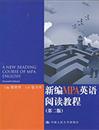
Unit 1 Defining Public Administration Text A Public Administration(by Frank Marini) Additional Expressions Exercises Text B The Legal Approach to Public Administration(by David H. Rosenbloom)
Unit 2 The Practice of Public Administration Text A The Rise of the American Administrative State(by David H. Rosenbloom) Additional Expressions Exercises Text B Public Management in Developing Countries(by Owen E. Hughes)
Unit 3 Decision Making in Public Administration Text A In Praise of Theory(by P.M. Jackson) Additional Expressions Exercises Text B Taxation Fairnss and Growth(by Thomas R. Dye)
Unit 4 Reinventing the Machinery of Government Text A Visions of the State and Governance(by B. Guy Peters) Additional Expressions Exercises Text B The Solution:Creating Entrepreneurial Organizations(from he National Performance Review)
Unit 5 Inter-Governmental Relations Text A Defining the Scale and Scope of the Federal State(by Janet E. Kodras) Additional Expressions Exercises Text B Understanding Intergovernmental Relations(by Deil S. Wright)
Unit 6 Management and Organization Theory Text A Politics and Power(by Harold F. Gortner Julianne Mahler and Jeanne Bell Nicholson) Additional Expressions Exercises Text B Scientific Management(by Frederick W. Taylor)
Unit 7 Organizational Behavior Text A Doctrine on Organization and Organizational Change(by John Paterson) Additional Expressions Exercises Text B Breaking through Bureaucracy(by Michael Barzelay with Babak J. Armajani)
Unit 8 Managerialism and Performance Management Unit 9 Strategic Planning and Management in Public Administration Unit 10 Leadership and Accountability Unit 11 Personnel Management Unit 12 Public Budgeting Unit 13 Evaluation and Measuring Productivity Unit 14 Social Equity Unit 15 Honor and Ethics Keys to the Exercises in Text A Glossary Bibliography
精彩片段:
Imagine how government would work if almost every operating decision——including the hiring and firing of individuals——were made on partisan political grounds; if many agencies spent their entire annual appropriations in the first three months of the fiscal year; if appropriations were made to agencies without anyone having formulated a spending and revenue budget for the jurisdiction as a whole; and if no agency or person in the executive branch had authority to oversee the activities of government agencies. This state of affairs was, in fact, the norm in the United States in the nineteenth century. That it sounds so chaotic and backward to us is due to the success of early twentieth-century reformers in influencing politics and administration at the city, state, and federal levels. As a result of their influence, most Americans take for granted that administrative decisions should be made in a businesslike manner, that the executive branch should be organized hierarchically, that most agency heads should be appointed by the chief executive, that the appropriations process should begin when the chief executive submits an overall budget to the legislature, that most positions should be staffed by qualified people, that materials should be purchased from responsible vendors based on objective criteria, and that systems of fiscal control and accountability should be reliable.

 中国大学出版社协会 |
首页 |
宏观指导 |
出版社天地 |
图书代办站 |
教材图书信息 |
教材图书评论 |
在线订购 |
教材征订
中国大学出版社协会 |
首页 |
宏观指导 |
出版社天地 |
图书代办站 |
教材图书信息 |
教材图书评论 |
在线订购 |
教材征订