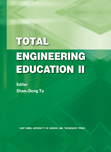
Facing the global economic depression, we need courage and wisdom. We have to plan for the future, but rethink the past. There is no exception for engineering education. New paradigms should be developed to avoid the future failure. Having the belief of “engineering for all and engineering education for all” Total Engineering Education (TEE) advocates that engineering education be implemented in all stages of education, beginning from our children in pre-school and kindergarten programs, through high school graduation, to graduate education and continuing education. TEE should be all inclusive in content to enable the students to see both the trees and the forest of an engineering issue and is committed to the total education of the individual as a social being. Furthermore, TEE should help all people to understand the engineering basis and appreciate the impact of engineering on socio-cultural systems and recognize engineering’s ability to address the world’s complex and changing challenges.
作者简介:
章节目录:
The future of engineering education: Towards totality and harmony
Shan-Dong Tu 1
Total engineering education in the 21st century: CDIO, TRIZ, global collaboration and blue ocean strategies
Harold P. Sjursen 9
Engineering education as a new academic discipline
Kurt Becker 23
Multiscaling: the common denominator for higher engineering education
G. C. Sih 29
The importance of engineering management and its challenges in globalization
C. Max Wang 37
Strategies for higher engineering education reform towards economy globalization: university-industry cooperation and
education globalization
Jianzhong Cha 45
Requirements and some concerns about engineering education in China in globalization era
Guangjun Cai 55
Engineering education in India
S. L. Mannan, N. S. Marimuthu 61
The balance between engineering subjects and social ability in general
Erik Dahlquist, Eva Thorin, Jinyue Yan 73
Predicting project success through team effectiveness
George Jergeas 79
Reality of management and engineering education
Bedrich Duchon 85
An electronic classroom response system for active learning and engineering education research
Ning Fang, Shaobo Huang 91
Collaboration and interdisciplinary projects: the positive effects for engineering and technology students
Ronald Sterkenburg, David Stanley 99
Emerging global engineering education: what, why, how?
W. J. Zhang, Zhiming Zhang, Raja R. Muddada 109
Research on freshmen’s autonomous learning competence
Shusheng Xu, Feifei Ye, Wenjing Li 115
The importance and challenges of alignment in engineering education
Robin Clark 121
Master education in collaboration with industry some experiences from Mälardalen University
Damir Isovic, Ivica Crnkovic 127
The entrepreneurship education at engineering universities in the context of total engineering education in China
Shoujian Luo, Bing Wu, Lai Song, Yilin Pan 137
Cultivation of engineer’s ethics: the unbearable weightiness of engineering education
Hualin Jiang 145
Preparing global engineers: graduate engineering education via project based learning and international collaboration
James Z. Zhang, Lingbo Zhang, Robert K. Mcmahan, Xinsheng Gu 151
Thinking and practice on the reforms of higher engineering education
Xiuying Zheng, Guangfeng Jiang, Zhifeng Fu 159
Research and education in the field of Applied Solid Mechanics
Naoya Tada 165
Linking professional certification with graduate education
Muhammad Sohail Ahmed, Bob Lahidji 173
Some opinions about the teaching of mechanical element design
Qi An, Jianwen Wang, Xiaofang Wang 181
Integrated management of course performance for engineer diploma education jointly run by SHU and UT network
Jin Jiang, Jinwu Qian, Ling Zhao, Xinhua Liu 187
Educating engineers through distance learning
Mark Endean 191
An interactive cross-continental education sharing experiment
Xunlei Wu, Victoria Szabo 203
Integrated e-learning for freshmen of engineering education
Miroslava Ožvoldová 215
Standardization of experimental course development on Internet
Hua Cheng, Jun Yao, Yiquan Fang 231
Integrated e-learning with remote experiments for engineering education in the era of networking
Franz Schauer 239
On the research and design of the e-learning teaching platform based on the soft bus structure
Yinxiang Li, Xiaoping Li, Baolin Wang, Xiaoxing Lv, Shuaizong Wang, Yan Shi, Lin Zhang 251
The promotion of distance education by using of information technology
Songhe Yuan 259
Distance simulated experiment-one example of virtual learning environment
Ying Sun, Jianbao Gao 265
Practice and exploration of the total engineering education in distance education
Jun Yao, Hua Cheng, Weiyong Ying 273
Research on development of distance education in China
Xin Ding, Jian Niu, Yanhui Han 279
To improve the students’ abilities in chemical engineering practice by constructivism theory
Hao Jin, Qiuxiang Zhang, Yunfeng Zhu, Mingzhai Qi, Chongheng He 289
The mission of engineering education: returning to the engineering, and serving the society
Ling Zhou, Yanli Sun, Xiaona Ma, Xiaoyan Kang 295
Development of a web-based interactive process control engineering laboratory for distance engineering education
Huazhong Wang, Hua Cheng, Jun Yao 317
The investigation and analysis on the program design of engineering education in distance education
Xiaoyan Kang 323
International IT education in the networking era the global campus project at Middlesex University in London
Chunyan Liu, A. D. Georgios 327
The chemical engineering program of the university in America and in China
Jie Huang 331
Entre preneurship education and student enterprise in China survey on views of students
Yalan Xie, Yilin Pan 339
CDIO based systematic reform of engineering education for quality enhancement
Peihua Gu 353
Innovation implications for (chemical) engineering education
Dieter Heinz 355
Engineering education at Ritsumeikan University
Masao Sakane 357
Engineering research for industrial development and wealth generation
Ahmed Shibli 359
Author index 361
Keywords index 363
精彩片段:
Total engineering education in the 21st century: CDIO, TRIZ, global collaboration and blue ocean strategies Harold P. Sjursen * New York University Polytechnic Institute, 55 Broad St New York, NY 10004, USA
Abstract The reflections that follow the fundamental precepts of Total Engineering Education will be examined in the light of some contemporary circumstances related to the globalization of technology, the imperative to innovate, and the benefits of collaboration. Possible strategies for the achievement of the objectives of TEE will be suggested including the application of CDIO, TRIZ and blue ocean strategy. The issue of engineering responsibility will be kept at the center of these reflections. The discussion will be in the double context of contemporary trends in technology and east Asian traditions. Keywords: Total Engineering Education; CDIO; TRIZ; Blue ocean strategy.

 中国大学出版社协会 |
首页 |
宏观指导 |
出版社天地 |
图书代办站 |
教材图书信息 |
教材图书评论 |
在线订购 |
教材征订
中国大学出版社协会 |
首页 |
宏观指导 |
出版社天地 |
图书代办站 |
教材图书信息 |
教材图书评论 |
在线订购 |
教材征订