数字逻辑设计及应用 - 中国高校教材图书网
|
书名: |
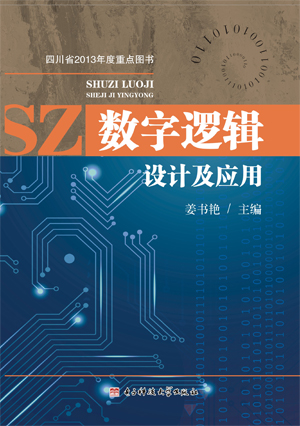
数字逻辑设计及应用
|
| ISBN: | 978-7-5647-2619-5 |
责任编辑: | |
| 作者: |
姜书艳
相关图书
|
装订: | 0 |
| 印次: | 1-1 |
开本: | 16开 |
| 定价: |
¥45.00
折扣价:¥45.00
折扣:1.00
节省了0元
|
字数: |
804千字
|
| 出版社: |
电子科技大学出版社 |
页数: |
516页
|
| 出版日期: |
2014-09-01 |
每包册数: |
|
| 国家规划教材: |
|
省部级规划教材: |
|
| 入选重点出版项目: |
|
获奖信息: |
|
|
|
| 内容简介: |
本书为适应现代数字电子技术集成工艺和计算机技术的飞速发展以及双语教学的需要,对传统的数字电路课程教材从内容到体系进行了尝试性的深入改革,突出理论与实践的结合,强调了双语的表达。本书讨论了数字逻辑设计及应用的基本理论和方法,通过实例介绍了多种电路结构,充实了计算机辅助设计的基本概念,并将可测性设计适度引入教材,有一定的广度和深度。本书取材眼界宽,有一定的前瞻性,重点强调CMOS逻辑系列,提供大量的设计实例,以及具有指导意义的练习题。全书叙述概念清楚,深入浅出,条理清晰。
本书共10章,主要内容有:信息的二进制表达、逻辑代数基础、逻辑门电路、组合逻辑电路设计、存储电路、时序逻辑电路设计、大规模半导体存储器和可编程逻辑器件、数模和模数转换、现代数字系统设计。
本书可作为高等学校电工、通信、控制、电气、电子信息和计算机等专业的大学本科教材,同时也可作为从事电路设计、通信工程以及计算机等专业科技工作者的参考书。
|
| 作者简介: |
|
|
| 章节目录: |
第一章 引论(Introduction) 1
1.1 我们周围的数字系统(Digital Systems around Us) 1
1.2 数字系统的世界(World of Digital Systems) 2
1.3 实现数字系统的方法(Implementing Digital Systems) 8
1.4 数字系统设计(Digital System Design) 11
本章小结(Brief Summary of this Chapter) 17
思考题和习题(Problems and Exercises) 17
第二章 信息的二进制表达(Binary Expression of Information) 18
2.1 引言(Introduction) 18
2.2 数字的二进制表达(Binary Expression of Numbers) 19
2.2.1 按位计数制(Positional Number Systems) 19
2.2.2 数字的二进制表达(Binary Expression of Number) 21
2.2.3 二进制缩写表达:八进制和十六进制(Abbreviation Expression of Binary Numbers:Octal and Hexadecimal Numbers) 22
2.2.4 二进制与十进制的转换(Binary and Decimal Number-System Conversions) 25
2.3 二进制数的算数运算(Arithmetic Operation of Binary Numbers) 31
2.3.1 数字系统中的无符号数(Unsigned Number of Digital System) 31
2.3.2 加法运算与乘法运算(Addition and Multiplication) 31
2.3.3 符号数的表达(Representation of Signed-Numbers) 36
2.3.4 不同表达方式之间的转换(Conversion of Different Expressions) 41
2.3.5 符号数的运算规则(Operational Rules of Signed Number) 44
2.3.6 定点数和浮点数的表示(Representation of Fixed Point Numbers and Floating Point Numbers) 47
2.4 信息的二进制编码(Binary Codes of Information) 49
2.4.1 一般字符与状态编码(Codes for General Character and State) 49
2.4.2 ASCII编码(ASCII Code) 50
2.4.3 十进制数的二进制编码(Binary Codes for Decimal Number) 52
2.4.4 独热码(One-hot Code) 55
2.4.5 格雷码(Gray Code) 56
2.4.6 检错和纠错编码(Codes for Detecting and Correcting Errors) 58
本章小结 (Brief Summary of this Chapter) 59
思考题和习题 (Problems and Exercises) 59
第三章 逻辑代数基础(Basis of Logic Algebra) 63
3.1 引言(Introduction) 63
3.2 基本逻辑系统表达(Expression of Basic Logic System) 64
3.2.1 逻辑代数中的三种基本运算(Three Basic Operations in Boolean Algebra) 64
3.2.2 几种导出的逻辑运算(Several Educed Logic Operation) 66
3.2.3 IEEE逻辑符号(IEEE Logic Symbols) 70
3.3 逻辑代数的公理和定理 (Axioms and Theorems in Logic Algebra) 71
3.3.1 公理(Axioms) 71
3.3.2 单变量定理(Single Variable Theorems) 71
3.3.3 二变量和三变量的定理(Two-and Three-Variable Theorems) 71
3.3.4 n变量定理(n-Variable Theorems) 74
3.3.5 异或、同或运算的定理(Theorems of XOR and XNOR Operations) 75
3.3.6 代入定理(Substitution Theorem) 76
3.3.7 反演定理(Complement Theorem) 77
3.4 正负逻辑与对偶定理(Positive and Negative Logic and Duality Theorems) 78
3.4.1 正负逻辑(Positive and Negative Logic) 78
3.4.2 对偶定理(Duality Theorem) 78
3.4.3 信号名和有效电平(Signal Names and Active Levels) 79
3.5 香农展开定理与标准逻辑运算(Shannon’s Expansion Theorems and Canonical Forms of Logic Function) 80
3.5.1 香农展开定理(Shannon’s Expansion Theorems) 80
3.5.2 真值表的标准逻辑表达(Standard Logic Expression of Truth Table) 81
3.5.3 最小项与最大项(Minterm and Maxterm) 82
3.5.4 逻辑函数的标准形式(Canonical Form of Logic Function) 85
3.5.5 最小项和最大项之间的关系(Relation ship of Minterm and Maxterm) 87
3.6 逻辑函数的表示方法(Expression Methods of Logic Functions) 88
3.6.1 逻辑函数的几种常用表示方法(Popular Expression Methods of Logic Function) 88
3.6.2 几种表示方法间的相互转换(Interconversion of Different Expressive Methods) 89
3.7 逻辑函数的化简(Simplification of Logic Functions) 93
3.7.1 逻辑函数的最简形式(Minimization Forms of Logic Functions) 93
3.7.2 利用逻辑代数公式化简(Minimization with Logic Algebra Equations) 94
3.7.3 卡诺图法化简逻辑函数(Minimization with Karnaugh Map) 97
3.7.4 具有无关项的逻辑函数及其化简(Minimization of Logic Function with Don’t Care Terms) 109
3.7.5 多输出函数的化简(Minimization of Multi-Outputs Function) 111
本章小结(Brief Summary of This Chapter) 113
思考题和习题(Problems and Exercises) 113
第四章 逻辑门电路(Logic Gates Circuits) 119
4.1 引言(Introduction) 119
4.2 MOS晶体管及其开关特性(MOS Transistor and Switch Characteristics) 123
4.3 CMOS基本逻辑门结构(CMOS Basic Logic Gates) 125
4.3.1 CMOS反相器(CMOS Inverter) 125
4.3.2 CMOS与非门和或非门(NAND Gate and NOR Gate) 126
4.3.3 其他电路结构CMOS门(Other CMOS Gate Circuit Structure ) 128
4.4 CMOS逻辑门的静态特性(The Static Characteristics of CMOS Logic Gates ) 131
4.4.1 传输特性与逻辑电平容限(Transmission Characteristic and Logic Level Margin) 131
4.4.2 输出电流与驱动能力(Output Current and Drive Ability) 134
4.4.3 输入/输出缓冲电路与电路的最大集成设计(Input/Output Buffer Circuit and the Largest Integrated Circuit Design) 136
4.5 CMOS逻辑门的动态特性 (Dynamic Characteristics of CMOS Gates) 137
4.5.1 传输延迟时间(Propagation Delay) 138
4.5.2 动态尖峰电流(Dynamic Current Spikes) 139
4.5.3 功率损耗(Power Dissipation) 139
4.5.4 高速和超高速CMOS门电路(High-speed and Ultrahigh-speed CMOS Gate Circuit) 140
4.6 CMOS门电路特点和使用中应注意的问题(Characteristic of CMOS Gate Circuit and NOTICE in Practice) 142
4.6.1 CMOS门电路的主要特点(Characteristic of CMOS Gate Circuit) 142
4.6.2 CMOS电路在使用中应注意的问题(Notice in Practice of COM Circuits) 142
4.7 其他逻辑门电路(Other Logic Gate Circuits) 143
4.7.1 分离器件逻辑门(Separated Elements Gates) 143
4.7.2 TTL逻辑门(TTL Gate Circuits) 145
4.7.3 ECL逻辑门(Emitter-Coupled Logic Gate Circuit) 150
* 4.7.4 I2L门电路(Integrated Injection Logic Gate Circuit) 152
4.8 TTL门电路与CMOS门电路的接口(Interface of TTL Gate Circuits and CMOS Gate Circuits) 153
4.8.1 TTL门电路驱动CMOS门电路(TTL Gate Circuits Drive CMOS Gate Circuits) 153
4.8.2 CMOS门电路驱动TTL门电路(Gate Circuits Drive TTL Gate Circuits) 154
本章小结(Brief Summary of This Chapter) 155
思考题和习题 (Problems and Exercises) 155
第五章 组合逻辑电路设计(Combinational Logic Circuit Design) 164
5.1 引言(Introduction) 164
5.2 组合逻辑电路的分析与设计(Analysis and Design of Combinational Logic Circuit) 166
5.2.1 组合逻辑电路的分析(Analysis of Combinational Logic Circuit) 166
5.2.2 组合逻辑电路的设计(Design of Combinational Logic Circuit) 172
5.2.3 组合逻辑电路中的险象(Hazards of Combinational Logic Circuit) 178
5.3 编码器(Encoder) 183
5.3.1 二进制编码器(Binary Encoder) 183
5.3.2 BCD编码器 (BCD Encoder) 183
5.3.3 优先编码器(Priority Encoder) 185
5.4 译码器(Decoder) 191
5.4.1 二进制译码器(Binary Decoder) 191
5.4.2 集成译码器的应用(Application of Integrated Decoder) 194
5.4.3 BCD译码器(BCD Decoder) 196
5.4.4 七段显示译码器(Seven Segment Display Decoder) 197
5.5 数据选择与分配控制(Control of Data Selection and Distribution) 204
5.5.1 数据分配器(Data Muxer) 204
5.5.2 多路复用器 (Multiplexer) 206
5.5.3 集成多路复用器的应用(Application of Integrated Muxer) 208
5.6 数据检测与比较(Data Test and Comparison) 213
5.6.1 奇偶校验电路及应用(Application of Parity Check Circuit) 213
5.6.2 数据比较器(Data comparator) 215
5.6.3 数值比较器(Magnitude Comparator) 216
5.7 数据运算电路(Data Operation Circuit) 220
5.7.1 全加器与加法器(Full Adder And Adder) 220
5.7.2 组合乘法器(Combinational Multiplier) 226
5.7.3 算数逻辑单元(Arithmetical Logic Unit ) 227
5.8 组合逻辑的延迟分析 (Delay Analysis of Combinational Logic Circuit) 228
5.8.1 器件延迟与线路延迟(Gate Delay and Propagation Delay) 228
5.8.2 数据通道的延迟分析(Delay Analysis of Data Path) 229
5.8.3 对大负载延迟的缓冲设计(Buffer Design of Maximizition of Load Delay) 230
5.9 组合逻辑电路设计的文档标准 (Standard of Document in Design of Combination Logic) 231
5.9.1 门的符号(Symbol of Gate) 231
5.9.2 信号名和有效电平(Signal Name and Effective Electrical Level) 232
5.9.3 “圈到圈”逻辑设计(Bubble-to-Bubble Logic Design) 234
本章小结 (Brief Summery of this Chapter) 236
思考题和习题 (Problems and Exercises) 237
第六章 存储电路(Memory Circuits) 245
6.1 引言(Introduction) 245
6.2 双稳态元件(Bistable Elements) 246
6.2.1 数字分析(Digital Analysis) 247
6.2.2 模拟分析(Analog Analysis) 247
6.2.3 亚稳态特性(Metastable Behavior) 248
6.3 S-R锁存器(Set-Reset Latch) 249
6.3.1 基本S-R锁存器(Basic Set-Reset Latch) 249
6.3.2 同步S-R锁存器(Synchronous Set-Reset Latch ) 255
6.3.3 S-R锁存器的时间参数(Timing Parameters of S-R Latch ) 259
6.4 D锁存器(D Latch) 260
6.4.1 D锁存器 260
6.4.2 D锁存器的时间参数(Timing Parameters of D Latch) 260
6.5 D触发器(D Flip-Flop) 262
6.5.1 边沿触发式D触发器(Edge-Triggered D Flip-Flop) 262
6.5.2 具有清零和预置端的D触发器(D Flip-Flop with Preset and Clear) 264
6.5.3 具有使能端的边沿D触发器(Edge-Triggered D Flip-Flop with Enable) 265
6.5.4 集成D触发器(Integrate D Flip-Flop) 265
6.6 其他类型触发器及其代换使用 (Conversion Between Flip-Flops) 266
6.6.1 J-K触发器(J-K Flip-Flop) 266
6.6.2 T触发器(T Flip-Flop) 267
6.6.3 JK触发器转换成D触发器(J-K Flip-Flop to D Flip-Flop) 268
6.7 用Verilog设计D触发器 269
本章小结(Brief Summary of this Chapter) 270
思考题和习题(Problems and Exercises) 271
第七章 时序逻辑电路设计 (Sequential Logic Circuit Design) 277
7.1 引言(Introduction) 277
7.2 时钟同步状态机分析(Clocked Synchronous State Machine Analysis) 278
7.2.1 时钟同步状态机的结构(Clocked Synchronous State Machine Structure) 278
7.2.2 时钟同步状态机的表达(Clocked Synchronous State Machine Expression) 280
7.2.3 有限状态机的分析(Finite-State Machine Analysis) 281
7.3 时钟同步状态机设计(Clocked Synchronous State Machine Design) 285
7.3.1 简单计数功能设计(Simple Counters Design Example) 287
7.3.2 序列发生器设计(Sequence Generator Design Example) 290
7.3.3 序列检测器设计举例(Sequence Detector Design Example) 291
7.4 二进制计数器(Counters) 293
7.4.1 行波计数器(Ripple Counters) 294
7.4.2 同步计数器(Synchronous Counters) 296
7.4.3 MSI型计数器及应用(MSI Counters and their Applications) 297
7.4.4 任意模计数器(Modulus-M Counters) 301
7.4.5 计数器的典型应用(Counters Applications) 304
7.5 移位寄存器(Shift Registers) 307
7.5.1 由D触发器构成的移位寄存器(Shift Registers Composed of D Latchs or Flip-Flops) 307
7.5.2 由JK触发器构成的移位寄存器(Shift Register Composed of J-K Flip-Flop) 309
7.5.3 双向移位寄存器(Bidirectional Shift Register) 309
7.5.4 MSI寄存器/移位寄存器(MSI Registers/ Shift Registers) 309
7.5.5 移位寄存器的应用(Shift Register Applications) 314
7.6 移位寄存型计数器(Shift-Register Counters) 319
7.6.1 基本结构与表达 319
7.6.2 环形计数器 320
7.6.3 扭环计数器(Twisted-Ring Counter) 323
7.6.4 线性反馈移位寄存型计数器 327
7.7 同步系统设计(Synchronous System Design) 330
7.7.1 同步系统的结构(Synchronous System Structure) 330
7.7.2 同步电路中的时间容限(Timing Margin in Synchronous System) 332
7.7.3 时钟偏移(Clock Skew) 333
7.7.4 选通时钟(Gating Clock) 336
7.7.5 异步输入(Asynchronous Inputs) 338
本章小结 (Brief Summary of This Chapter) 340
思考题和习题 (Problems and Exercises) 341
第八章 大规模半导体存储器和 可编程逻辑器件(VLSI Semiconductor Memory And Programmable Logic Devices) 350
8.1 引言(Introduction) 350
8.2 半导体存储器(Semiconductor Memory) 352
8.2.1 只读存储器(Read-Only Memory,ROM) 352
8.2.2 随机存取存储器(Random Access Memory,RAM) 357
8.2.3 用ROM存储器实现组合逻辑函数(Implement Combinational Logic Functions with Memory) 363
8.3 复杂可编程逻辑器件(Complex Programmable Logic Device, CPLD) 365
8.3.1 复杂可编程逻辑器件的结构(Structure of the Complex Programmable Logic Device) 367
8.3.2 基于可编程逻辑器件的电路实现(Circuit Implementation Based on Programmable Logic Device) 369
8.4 现场可编程门阵列(Field Programmable Gate Array,FPGA) 375
8.4.1 现场可编程门阵列FPGA的电路结构(Field Programmable Gate Arrays FPGA Circuit Structure) 376
8.4.2 基于FPGA的逻辑实现(FPGA-based Logic Implementation) 382
8.5 CPLD和FPGA可编程逻辑器件的开发 (PLD Research And Development) 382
8.5.1 FPGA可编程IP资源(FPGA programmable IP resources) 383
8.5.2 FPGA和CPLD可编程逻辑器件开发(FPGA and CPLD Programmable Logic Device Development) 384
本章小结 (Brief Summary of this Chapter) 386
思考题和习题 (Problems and Exercises) 387
第九章 数模和模数转换器 (DAC and ADC) 390
9.1 引言(Introduction) 390
9.2 数模转换器(DAC) 391
9.2.1 权电阻网络数模转换器(Weight Resistance Network DAC) 391
9.2.2 权电流型数模转换器(Weight Current DAC ) 393
9.2.3 倒T形电阻网络数模转换器(Inverse T Form Resistance Network DAC) 395
9.2.4 数模转换器的转换精度与转换速度(Conversion Precision and Conversion Speed of DAC) 397
9.3 模数转换器(ADC) 401
9.3.1 模数转换的基本原理(Fundamental Principle of ADC) 401
9.3.2 采样—保持电路(Sampling-Holding Circuits) 404
9.3.3 并联比较型模数转换器(Parallel Comparative ADC) 406
9.3.4 逐次渐近型模数转换器(Gradually Approach ADC) 409
9.3.5 双积分型模数转换器(Double Integral ADC) 411
9.3.6 模数转换器的转换精度与转换速度(Conversion Precision and Conversion Rate of ADC) 415
9.4 模数转换器和数模转换器的应用实例(Application Example of ADC and DAC) 417
9.4.1 数模转换器实例(Application Example of DAC) 417
9.4.2 典型AD转换器及应用 420
本章小结(Brief Summary of This Chapter) 423
思考题和习题(Problems and Exercises) 423
第十章 现代数字系统设计 (Modern Digital System Design) 426
10.1 引言(Introduction) 426
10.2 数字系统的计算机辅助设计流程 (Digital System of Computer Aided Design Process) 426
10.2.1 设计工具的演变(Evolvement for Design Tools) 427
10.2.2 数字系统设计方法(Design Method for Digital System) 427
10.2.3 数字系统EDA设计流程(EDA for Digital System) 429
10.2.4 基于HDL的现代数字系统设计(Modern Digital System Design Based on HDL) 432
10.3 数字系统结构设计(Structure Design of Digital System) 435
10.3.1 数字系统结构表示方法(Representation of Digital System Structure) 435
10.3.2 数字系统流水设计(Stream Design of Digital System) 436
10.3.3 数字系统并行设计(Parallel Design of Digital System) 441
10.3.4 数字系统同步电路设计(Digital System Synchronous Circuit Design) 443
10.4 现代数字系统设计的面临问题 (Problem of Modern Digital System Design Faced) 444
10.4.1 可测性设计(Design For Testability,DFT) 444
10.4.2 可靠性设计(Design of Reliability) 447
10.4.3 高速数字系统中的信号传输问题(Signal Transmission Problem in High Speed Digital System) 451
本章小结(Brief Summary of this Chapter) 457
思考题和习题(Problems and Exercises) 457
参考文献 459
习题参考译文 460
第一章 引论(Introduction) 460
第二章 信息的二进制表达(Binary Expression of Information) 460
第三章 逻辑代数基础(Basis of Logic Algebra) 462
第四章 逻辑门电路(Logic Gates Circuits) 466
第五章 组合逻辑电路设计(Combination Logic Circuit Design) 476
第六章 存储电路(Memory Circuits) 484
第七章 时序逻辑电路设计(Sequential Logic Circuit Design) 490
第八章 大规模半导体存储器和可编程逻辑器件 (VLSI Semiconductor Memory And Programmable Logic Devices) 497
第九章 数模和模数转换器(DAC and ADC) 499
第十章 现代数字系统设计(Modern Digital System Design) 501
|
| 精彩片段: |
|
|
| 书 评: |
|
|
| 其 它: |
|
|
|

 中国大学出版社协会 |
首页 |
宏观指导 |
出版社天地 |
图书代办站 |
教材图书信息 |
教材图书评论 |
在线订购 |
教材征订
中国大学出版社协会 |
首页 |
宏观指导 |
出版社天地 |
图书代办站 |
教材图书信息 |
教材图书评论 |
在线订购 |
教材征订
